
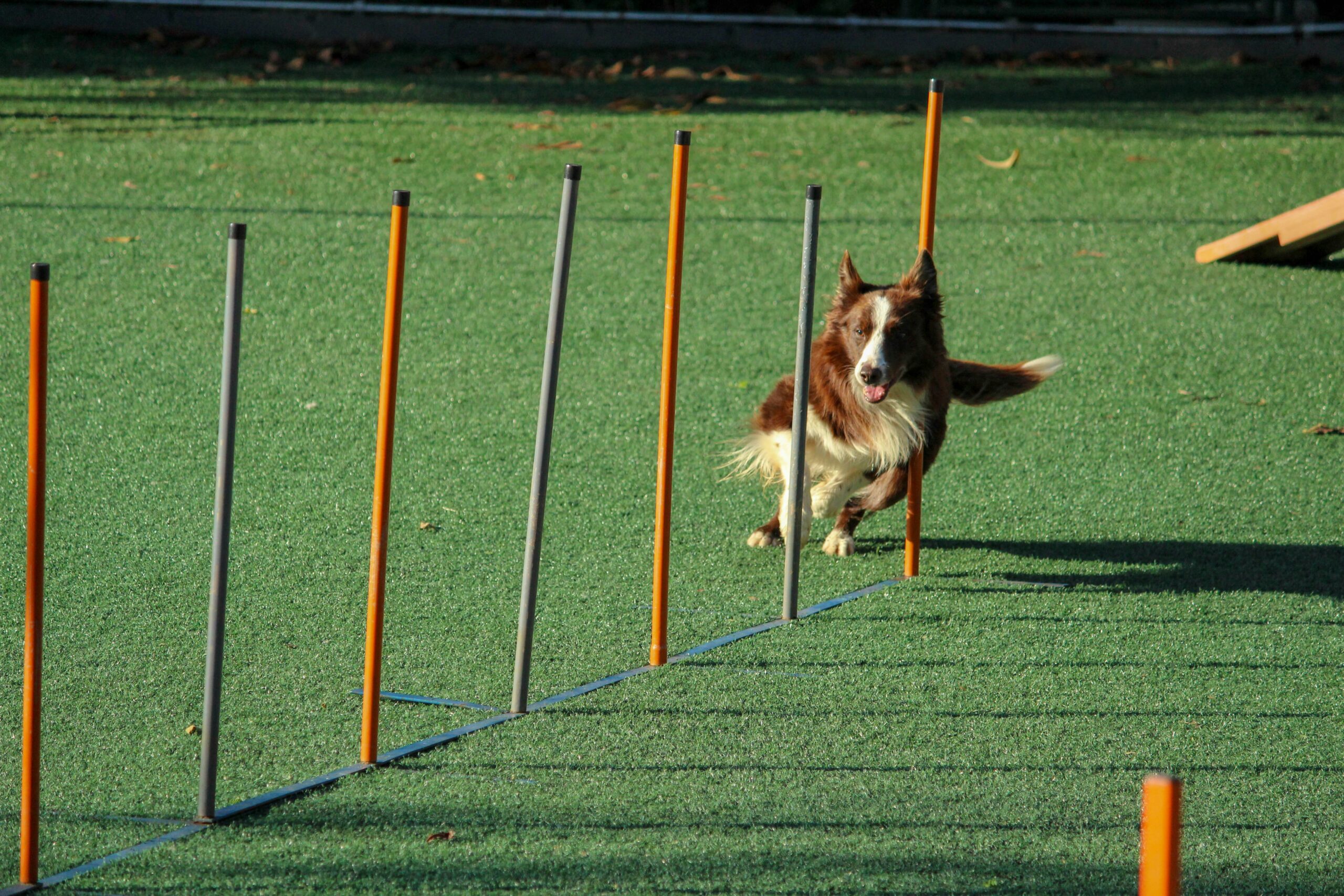
The D’s of Dog Training are a proven framework used by professional trainers to build reliable obedience and clear communication between dogs and their owners. Rather than rushing commands or expecting instant results, this method focuses on gradually shaping behavior through structured progression. By understanding the D’s of Dog Training, pet owners can train their dogs more effectively, reduce frustration, and create consistent results. Whether you are working with a puppy or an adult dog, these principles help transform basic commands into dependable behaviors that work in real-life situations.
One of the biggest challenges in dog training is maintaining consistency when conditions change. The D’s of Dog Training address this challenge by breaking learning into manageable elements that dogs can understand and master over time. Instead of overwhelming your dog, the D’s guide you to adjust training variables systematically. This approach allows dogs to succeed at each stage while reinforcing confidence and trust. When applied correctly, the D’s of Dog Training make learning clearer for dogs and easier for owners, leading to stronger obedience and fewer behavioral setbacks.
The beauty of the D’s of Dog Training lies in their flexibility and real-world application. Dogs do not live in controlled environments forever, so training must prepare them for everyday distractions, varying distances, and longer durations. By following the D’s of Dog Training, you can gradually increase difficulty without confusing your dog. This method helps ensure that commands such as sit, stay, or come remain reliable at home, outdoors, or in busy environments, making training practical rather than purely theoretical.
Ultimately, mastering the D’s of Dog Training helps build a well-behaved, confident dog and a more confident handler. These principles are not about shortcuts or rigid rules but about understanding how dogs learn best. When owners apply the D’s of Dog Training consistently, they create a strong foundation for lifelong learning and positive behavior. This structured approach encourages patience, clarity, and progress, making it an essential guide for anyone serious about effective and humane dog training.
1. What Are the D’s of Dog Training?
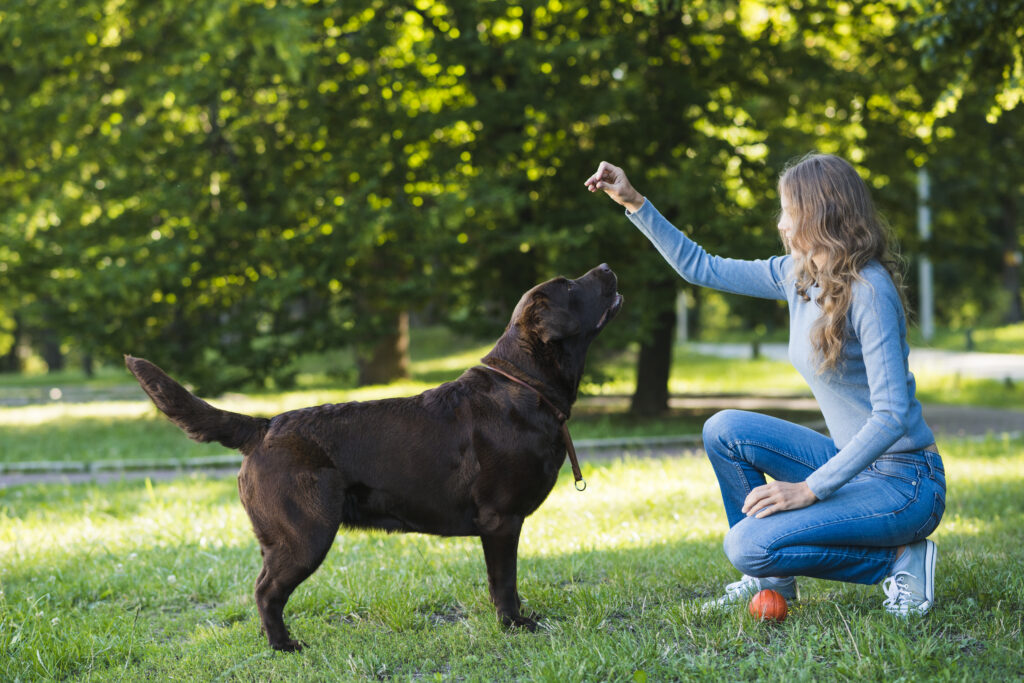
The D’s of Dog Training are a set of five key principles designed to structure effective and consistent dog training. These principles—Distance, Duration, Distraction, Difficulty, and Diversity—provide a clear roadmap for teaching dogs commands that are reliable in various situations. Rather than relying on repetition alone, the D’s of Dog Training focus on gradually increasing the challenge for the dog while maintaining success at each stage. By breaking training into these measurable components, owners can better understand their dog’s learning process, prevent frustration, and achieve long-lasting obedience. It’s a systematic approach embraced by trainers worldwide.
Understanding the D’s of Dog Training is essential for creating a balanced and confident dog. Each “D” represents a different aspect of learning that helps dogs generalize commands to real-life scenarios. For instance, Distance teaches a dog to obey from afar, while Duration ensures commands are maintained over time. Distraction and Difficulty prepare dogs for real-world challenges, and Diversity introduces new environments and situations. Together, the D’s of Dog Training ensure commands are not just learned but retained reliably. Applying these principles consistently makes training more effective, enjoyable, and stress-free for both dogs and their owners.
1.1 Why the D’s of Dog Training Matter
The D’s of Dog Training matter because they provide a structured roadmap for teaching dogs reliable behaviors. Without a clear framework, training can become inconsistent, confusing, and frustrating for both the dog and the owner. By focusing on the key elements of distance, duration, distraction, difficulty, and diversity, trainers can systematically build obedience and comprehension. Each “D” addresses a specific challenge dogs face in learning commands, helping to break down complex behaviors into manageable steps. Understanding and applying the D’s of Dog Training ensures that lessons stick, creating long-term, dependable results rather than temporary compliance.
Another reason the D’s of Dog Training are so important is that they promote positive learning experiences. Dogs respond best to clear expectations, consistent practice, and gradual progression. The D’s help owners teach commands in a way that reduces stress and encourages confidence, rather than relying on punishment or pressure. By using this framework, pet owners can train in different environments, with varying distractions and levels of difficulty, while maintaining control and trust. Ultimately, the D’s of Dog Training matter because they create a reliable, effective, and humane approach that strengthens the bond between dog and handler.
1.2 How the D’s of Dog Training Improve Obedience
The D’s of Dog Training significantly improve obedience by breaking down learning into clear, manageable steps. By focusing on elements like distance, duration, and distraction, dogs can master each command without confusion or frustration. This structured approach ensures that behaviors are learned reliably, rather than sporadically, helping dogs understand exactly what is expected of them. When commands are practiced progressively, dogs develop consistency in responding, which strengthens trust between pet and owner. The D’s of Dog Training also prevent training burnout, as dogs experience success at each stage, reinforcing positive behaviors and reducing the likelihood of resistance or disobedience.
Another way the D’s of Dog Training enhance obedience is by preparing dogs for real-world situations. Training isn’t just about performing commands in a quiet room—it’s about reliability under varied conditions. By gradually introducing distractions, increasing distance, and extending duration, dogs learn to respond even when challenges arise. This step-by-step method builds focus, self-control, and confidence, which are essential for long-term obedience. Owners also gain insight into their dog’s learning pace, allowing adjustments that maintain progress without overwhelming the animal. Overall, the D’s of Dog Training create a strong foundation for dependable, practical obedience in everyday life.
2. Distance in the D’s of Dog Training

Distance in the D’s of Dog Training is a crucial element that helps dogs respond reliably, even when their handler is not right beside them. Training at varying distances ensures that commands such as “sit,” “stay,” or “come” work consistently, whether the dog is a few steps away or across the yard. By gradually increasing the distance during practice, owners teach their dogs to maintain focus and obedience without constant supervision. Understanding distance within the D’s of Dog Training allows for safer, more controlled interactions and builds the dog’s confidence in following instructions in real-world settings.
Increasing distance in the D’s of Dog Training requires patience, timing, and gradual progression. Starting with short, manageable distances helps dogs succeed and reinforces positive behavior. As your dog masters these initial steps, distance can be extended while maintaining consistent rewards and corrections. This method prevents frustration and reduces the likelihood of errors during training. The D’s of Dog Training emphasize that dogs learn best when challenges are introduced slowly, allowing them to associate obedience with positive outcomes. Over time, practicing distance strengthens reliability, making commands effective in both familiar and distracting environments.
2.1 Teaching Commands from Short Distance
Teaching commands from a short distance is the first step in building a dog’s understanding and obedience. At close range, dogs can focus entirely on the handler without being distracted by their environment. This approach allows for clear communication of commands like sit, stay, or come, making it easier for the dog to associate the word with the desired behavior. By starting from a short distance, trainers can give immediate feedback, whether it’s praise for correct behavior or gentle correction for mistakes. This foundational step ensures the dog gains confidence and comprehension before progressing to more challenging situations.
Once a dog consistently responds to commands at a short distance, training can be gradually expanded to greater distances. The initial short-distance training strengthens the bond between the dog and handler, as the dog learns that paying attention and responding promptly yields positive outcomes. Additionally, short-distance training minimizes frustration for both parties, as commands are easier to enforce and rewards are immediate. By mastering commands up close, dogs develop focus, reliability, and a clear understanding of expectations. This step is essential in the D’s of Dog Training, forming the groundwork for distance, duration, and distraction training later on.
2.2 Increasing Distance Without Losing Control
Increasing distance during dog training is a critical step in helping your dog generalize commands beyond close proximity. The key is to ensure your dog remains focused and responsive even when you’re several feet away. Start by giving commands from a short distance and rewarding successful responses consistently. Gradually step back while keeping your tone clear and your body language consistent. Using a long leash or training line can provide a safety net, allowing your dog some freedom while maintaining control. Consistency and patience are essential to prevent confusion or reinforcement of unwanted behaviors as distance increases.
Maintaining control at a distance also means managing distractions and keeping sessions short but frequent. Incorporate high-value treats, praise, or toys to motivate your dog, especially when testing new distances. Avoid calling your dog from a long distance in high-distraction environments initially; instead, slowly introduce distractions as your dog demonstrates reliability. By progressing step by step, your dog learns that obedience is expected regardless of proximity. Over time, this approach strengthens recall, improves focus, and builds trust, ensuring your dog responds reliably even when you’re not immediately beside them.
3. Duration in the D’s of Dog Training

Duration in the D’s of Dog Training focuses on how long a dog can successfully maintain a behavior before receiving a reward or release. This element is often overlooked, yet it plays a critical role in building reliable obedience. When working on duration, trainers begin by asking for very short periods of compliance, such as a brief sit or stay, and gradually increase the time. In the D’s of Dog Training, duration should always be extended slowly to avoid confusion or frustration. Clear timing, consistent reinforcement, and patience help dogs understand that holding a command longer leads to success.
As duration increases in the D’s of Dog Training, distractions and distance should remain minimal until the dog shows confidence. Many training setbacks occur when owners increase duration too quickly, causing the dog to break the command prematurely. The D’s of Dog Training emphasize rewarding calm, steady behavior and resetting the exercise if the dog fails. By systematically building duration, dogs learn self-control and focus, which are essential for real-life situations. This structured approach ensures commands remain dependable, even when dogs are asked to wait longer before receiving praise or rewards.
3.1 Building Longer Stays Gradually
Building longer stays gradually is a key principle within the D’s of Dog Training, as it helps dogs understand that remaining in position is just as important as performing the command itself. Many dogs can sit or lie down briefly, but struggle when asked to hold the position for extended periods. By slowly increasing duration, you allow your dog to succeed without confusion or frustration. Start with just a few seconds and reward calm, steady behavior. This gradual approach reinforces patience, builds impulse control, and ensures your dog clearly understands what is expected during stay commands.
Within the D’s of Dog Training, duration should always be increased in small, manageable increments to maintain reliability. Rushing this process often leads to broken stays and inconsistent responses, which can confuse your dog. Instead, add time one step at a time, rewarding success before moving forward. If your dog breaks the stay, reduce the duration and rebuild confidence. Practicing longer stays in short, positive sessions helps strengthen focus and self-control, making the command dependable in real-world situations where patience and steadiness are essential.
3.2 Common Duration Mistakes to Avoid
One of the most common errors trainers make when working on duration is increasing time too quickly. Dogs need gradual progress to fully understand what is expected of them, yet many owners expect their dog to hold a command for long periods before the behavior is solid. Extending duration too fast often leads to frustration, breaking commands, or inconsistent responses. Within the D’s of Dog Training, duration should always be built in small, achievable increments. Rewarding brief success helps reinforce confidence and clarity, ensuring the dog understands that maintaining the behavior calmly is more important than lasting longer immediately.
Another frequent mistake is neglecting to reset duration when other training factors change. When distractions increase or distance is added, many trainers forget that duration must be reduced temporarily. Expecting a dog to maintain a long stay while also facing new environments or distractions can overwhelm them. According to the D’s of Dog Training, duration should be adjusted whenever training conditions shift. Ignoring this principle often results in failure, confusion, and slower progress. By shortening duration during new challenges and rebuilding gradually, trainers maintain success and help dogs develop reliable, long-lasting obedience.
4. Distraction in the D’s of Dog Training
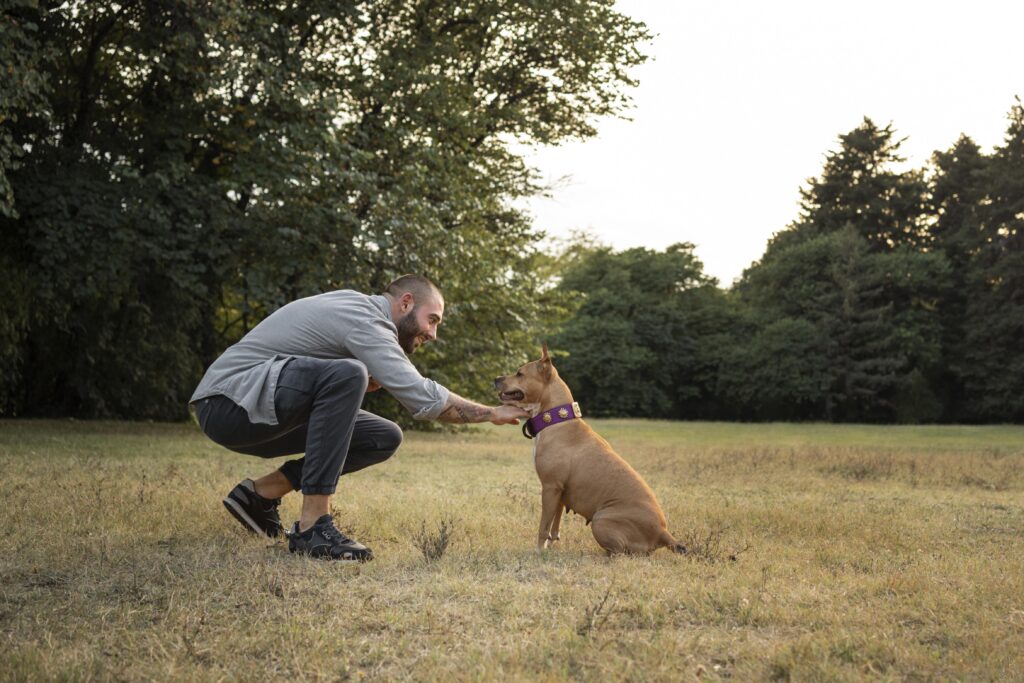
Distraction in the D’s of Dog Training focuses on teaching dogs to respond reliably even when their environment becomes more stimulating. Dogs naturally react to sights, sounds, people, and other animals, which can easily break their concentration during training. By gradually introducing distractions, trainers help dogs learn to focus on commands rather than external triggers. Starting in a quiet space and slowly adding mild distractions allows the dog to succeed without feeling overwhelmed. This structured approach ensures that obedience skills remain strong and clear, reinforcing the importance of attention and self-control within the D’s of Dog Training framework.
As dogs progress, distraction levels should reflect real-world situations they are likely to encounter. The D’s of Dog Training emphasize increasing distractions only after the dog has mastered commands in calmer environments. This may include practicing around toys, other pets, or outdoor activity while maintaining consistency and patience. Properly managing distraction helps dogs understand that commands apply everywhere, not just during structured sessions. Over time, this builds reliability, confidence, and impulse control, ensuring that trained behaviors remain dependable even in busy or unpredictable environments.
4.1 Training Dogs Around Mild Distractions
Training dogs around mild distractions is a crucial step in applying the D’s of Dog Training, as it teaches dogs to focus even when their environment is not perfectly controlled. Mild distractions such as soft noises, moving objects, or familiar people nearby help bridge the gap between indoor practice and real-world obedience. At this stage, the goal is not perfection but consistency. By introducing distractions gradually, dogs learn that commands still apply even when something interesting is happening around them, reinforcing reliability without overwhelming or confusing the dog.
Using mild distractions correctly within the D’s of Dog Training requires careful timing and patience. Trainers should start with low-level distractions and reward the dog for maintaining focus and responding correctly. If the dog struggles, reducing the distraction level rather than repeating commands helps prevent frustration. This process builds confidence and strengthens communication between the dog and handler. Over time, dogs trained around mild distractions become more resilient learners, making it easier to progress toward higher levels of difficulty in more stimulating environments.
4.2 Proofing Commands Against Real-World Distractions
Proofing commands against real-world distractions is a crucial step in making training truly reliable. Dogs often perform well in quiet, familiar environments but struggle when faced with new sights, sounds, or movements. By gradually introducing distractions such as other people, dogs, noises, or outdoor environments, you teach your dog to stay focused on commands despite changing conditions. This process helps strengthen impulse control and reinforces the idea that cues apply everywhere, not just at home. Consistent practice with controlled distractions builds confidence and prevents confusion, allowing your dog to respond calmly and accurately in everyday situations.
Effective proofing requires patience, planning, and realistic expectations. Start with mild distractions and reward success generously before increasing difficulty. If your dog struggles, reduce the distraction level rather than repeating commands or showing frustration. Short, focused training sessions in different locations help reinforce learning without overwhelming your dog. Over time, your dog learns that listening to commands is always rewarding, regardless of what is happening around them. Proper proofing transforms basic obedience into dependable behavior, ensuring your dog remains responsive, safe, and well-mannered in real-world scenarios.
5. Difficulty and Diversity in the D’s of Dog Training

Difficulty and Diversity in the D’s of Dog Training play a crucial role in ensuring that a dog’s obedience is reliable in real-life situations, not just during practice sessions. Difficulty refers to gradually increasing the challenge level of a command, such as asking for longer stays, faster responses, or more complex behaviors. By slowly adjusting difficulty, trainers prevent confusion and frustration while encouraging steady progress. Within the D’s of Dog Training, this step-by-step increase allows dogs to build confidence, understand expectations clearly, and succeed without being overwhelmed by tasks beyond their current skill level.
Diversity focuses on teaching commands across different environments, surfaces, and situations so dogs learn to generalize behaviors. In the D’s of Dog Training, diversity ensures that a dog who listens at home will also respond at the park, on walks, or around unfamiliar people and animals. Training in varied locations helps dogs recognize that commands apply everywhere, not just in one setting. When difficulty and diversity are combined thoughtfully, the D’s of Dog Training create well-rounded, dependable behavior that holds up under changing conditions and everyday distractions.
5.1 Increasing Difficulty Step by Step
Increasing difficulty step by step is a core principle within the D’s of Dog Training because it allows dogs to succeed without becoming confused or overwhelmed. Training should always begin at the easiest level, where the dog can clearly understand and perform the command. Once the behavior is reliable, difficulty can be increased gradually by adding small challenges. This may include changing the training environment, adding mild distractions, or combining commands. By progressing slowly, dogs build confidence and learn that following cues consistently leads to positive outcomes, reinforcing trust between the dog and handler.
Within the D’s of Dog Training, increasing difficulty in a structured manner helps prevent common training setbacks. Moving too fast can cause frustration, mistakes, or loss of focus, which often leads owners to believe their dog “isn’t listening.” In reality, the task may simply be too hard at that moment. By adjusting difficulty incrementally, trainers can identify exactly where a dog struggles and provide support before advancing. This thoughtful progression strengthens obedience, improves reliability, and ensures that learned behaviors hold up under more challenging real-world conditions.
5.2 Training in Diverse Environments for Reliability
Training in diverse environments is essential for building reliable obedience because dogs do not naturally generalize behaviors. A command that works perfectly at home may fall apart at the park or on a busy street. By practicing the D’s of Dog Training across different locations, surfaces, and situations, dogs learn that commands apply everywhere, not just in familiar settings. Gradually introducing new environments helps dogs adapt without becoming overwhelmed. This approach strengthens understanding, builds confidence, and ensures that learned behaviors remain consistent even when surroundings, sounds, and smells change unexpectedly.
Reliability improves when environmental diversity is introduced systematically rather than randomly. Using the D’s of Dog Training, trainers can control difficulty while changing locations, allowing dogs to succeed at each stage. Starting in quiet areas and slowly moving to more stimulating environments reinforces clarity and focus. Over time, dogs learn to respond despite distractions, unfamiliar people, or novel experiences. Training in diverse environments not only improves obedience but also prepares dogs for real-life situations, making them safer, more dependable, and easier to manage in everyday life.
Final Thought
As you wrap up your journey through the D’s of Dog Training, remember that effective training is built on clear communication, consistency, and positive reinforcement. For science‑backed techniques that complement the D’s, check out this comprehensive guide on how positive reinforcement works from Humane World for Animals (https://www.humaneworld.org/resources/positive-reinforcement-training) Humane World and explore practical training tips from Dogster (https://www.dogster.com/dog-training/positive-reinforcement-dog-training) Dogster. By applying what you learned in the Distance, Duration, and Distraction sections of this guide, you’ll build reliable behaviors in real‑world settings. Be sure to also read our common duration mistakes to avoid and training dogs around mild distractions sections for deeper insights, and revisit these principles often as you and your dog continue learning together.

William Brooks is a passionate dog care expert with extensive knowledge in canine nutrition, behavior, and training. After years of extensive experience, William is committed to assisting dog owners in raising healthier, happier, and well-adjusted dogs. William is known for his no-nonsense approach to addressing various dog care concerns, and he has the ability to break down tough issues into simple steps that will actually give you results. No need to ask why – his aim is simple: better care, better nutrition, better dogs.