
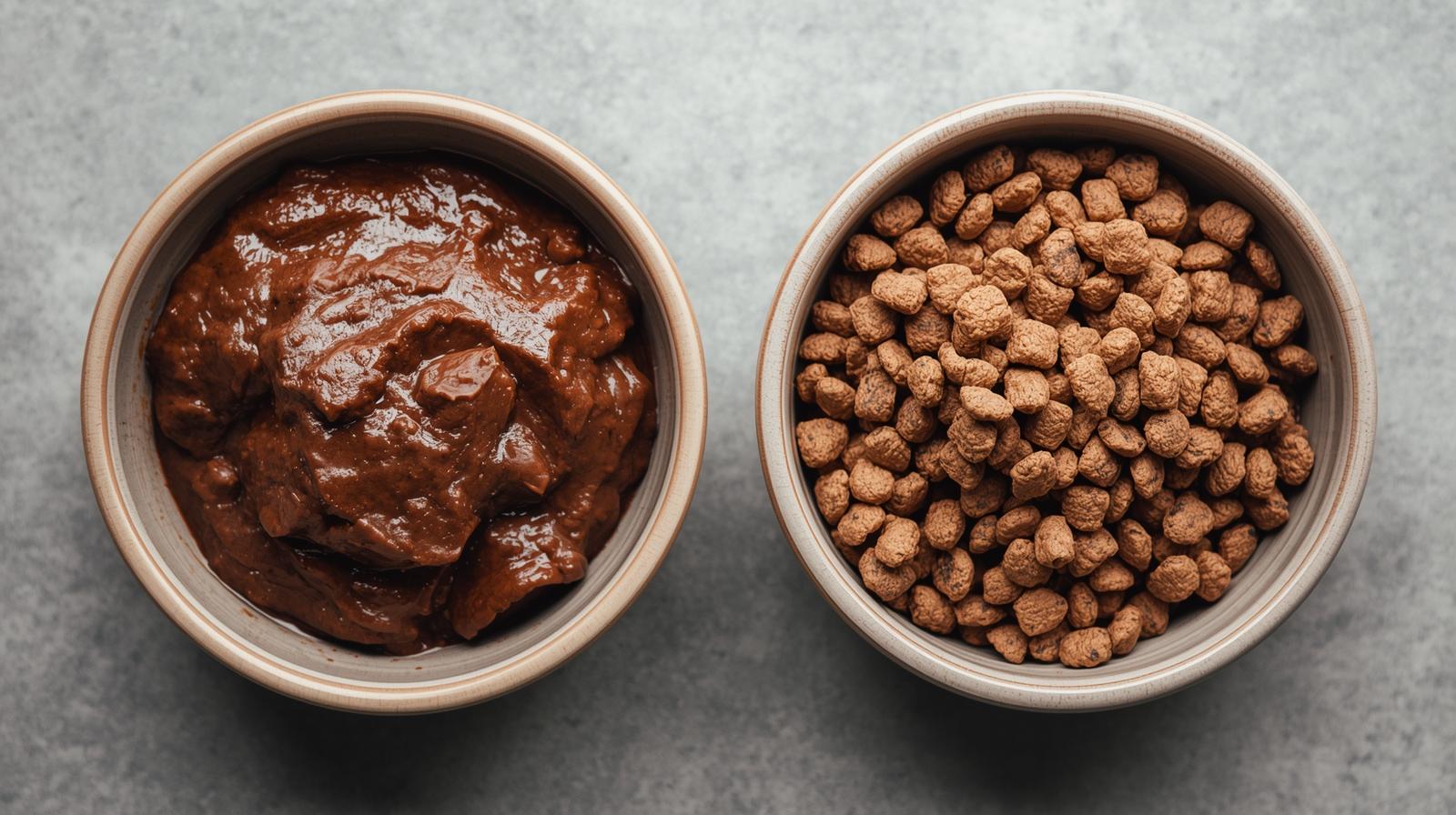
Choosing between Dry vs Wet Dog Food is a common decision for dog owners. Each option offers unique benefits and limitations depending on a dog’s age, health, and eating habits. Understanding the key differences helps owners make better feeding choices for long-term canine health.
Benefits of dry dog food
When comparing Dry vs Wet Dog Food, dry dog food is often preferred for its convenience and long shelf life. It is easy to store, simple to measure, and fits well into a consistent feeding routine for most dog owners. From a cost perspective, Dry vs Wet Dog Food comparisons usually favor dry food because it is more affordable over time, especially for medium and large breeds.
Another major benefit highlighted in Dry vs Wet Dog Food discussions is dental health. Dry kibble encourages chewing, which can help reduce plaque buildup and support healthier teeth. Many veterinarians recommend dry food as part of a long-term feeding strategy when evaluating Dry vs Wet Dog Food options for adult dogs.
Dry food is also nutritionally dense. In most Dry vs Wet Dog Food analyses, dry formulas provide balanced nutrients in smaller portions, making portion control easier. This is particularly useful for owners managing weight or feeding schedules. Overall, dry dog food remains a practical, economical, and widely trusted choice for daily feeding.
Drawbacks of dry dog food
Despite its advantages, Dry vs Wet Dog Food comparisons also reveal some drawbacks of dry dog food. One common issue is palatability, as some dogs find dry food less appealing due to its texture and mild aroma. In many Dry vs Wet Dog Food cases, picky eaters may refuse dry food altogether.
Another concern raised in Dry vs Wet Dog Food discussions is hydration. Dry food contains very little moisture, which means dogs must drink sufficient water daily. For dogs that naturally drink less, this becomes a key consideration when evaluating Dry vs Wet Dog Food choices.
Ingredient quality can also be a drawback. Lower-end dry foods may include fillers, artificial flavors, or low-quality by-products. When analyzing Dry vs Wet Dog Food, it becomes clear that not all dry foods are equal, and label reading is essential. While dry food is convenient, choosing the right brand is critical to avoid nutritional gaps and long-term health issues.
Benefits of wet dog food
In many Dry vs Wet Dog Food comparisons, wet dog food stands out for its taste and aroma. Dogs are naturally attracted to wet food because it closely resembles fresh meals, making it ideal for picky eaters. This strong preference often tips Dry vs Wet Dog Food decisions in favor of wet food for reluctant dogs.
Hydration is another major advantage discussed in Dry vs Wet Dog Food evaluations. Wet food contains high moisture content, which supports kidney function and overall hydration. This makes wet food particularly useful when comparing Dry vs Wet Dog Food options for older dogs or those with medical needs.
Texture also plays an important role. Wet food is soft and easy to chew, making it suitable for puppies and senior dogs. In many Dry vs Wet Dog Food scenarios, owners use wet food as a topper to improve appetite. These benefits make wet food an effective option for targeted feeding and special dietary situations.
Drawbacks of wet dog food
Wet food is generally more expensive and has a shorter shelf life once opened. It also requires refrigeration after opening, which can be inconvenient for some owners.
Another downside is dental health. Wet food does not provide the same chewing benefits as dry food, which may contribute to plaque buildup if dental care is not maintained.
Final thoughts
Both dry and wet dog food have their place in a dog’s diet. The best choice depends on your dog’s needs, preferences, and lifestyle. Some owners find that a combination of both provides the right balance of nutrition, taste, and convenience.
Understanding these pros and cons helps dog owners make informed decisions that support long-term health.

William Brooks is a passionate dog care expert with extensive knowledge in canine nutrition, behavior, and training. After years of extensive experience, William is committed to assisting dog owners in raising healthier, happier, and well-adjusted dogs. William is known for his no-nonsense approach to addressing various dog care concerns, and he has the ability to break down tough issues into simple steps that will actually give you results. No need to ask why – his aim is simple: better care, better nutrition, better dogs.
1 thought on “Ultimate Dry vs Wet Dog Food 2025: Pros and Cons”